

Top Accounting Software Features for UAE Businesses (2026)
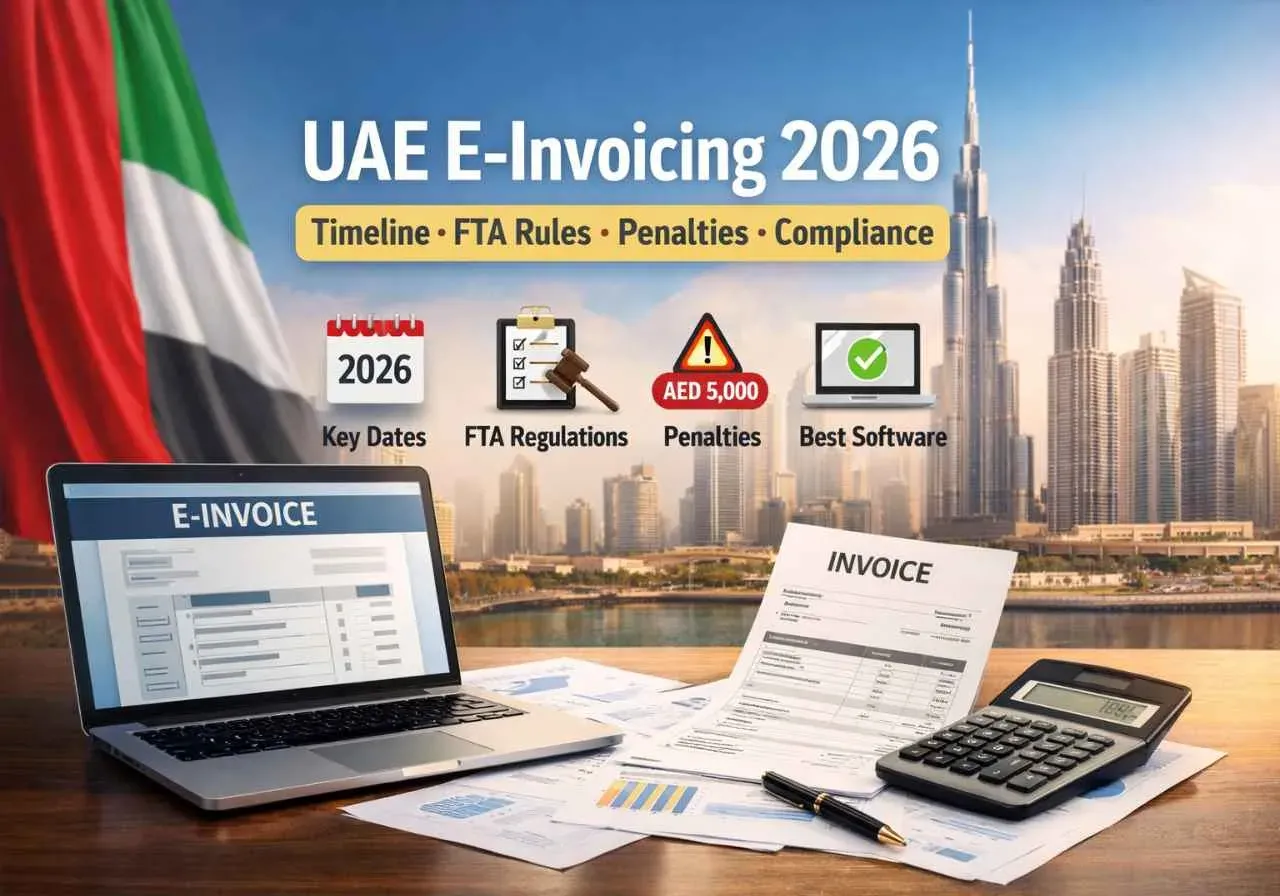
The accounting systems companies used five years ago in the UAE wouldn’t even get a second glance today, and that’s not just because technology moves fast. It’s because regulatory expectations have shifted, and businesses are under serious pressure. VAT is the norm here, corporate tax is now part of the picture, and from July 2026, the UAE is rolling out mandatory e-invoicing with penalties for non-compliance. So, companies can’t afford half-baked solutions that leave them scrambling at the last minute.
This means the feature set you choose in your accounting software must be a proper business decision. So what exactly should you expect from an accounting system in 2026? Let’s have a look at the Accounting software features UAE.
Essential Accounting Software Features for UAE Businesses
Before getting into the tax side of things, it helps to think about what teams in the UAE actually deal with day to day. Most people just want a system that doesn’t slow them down, something that keeps the numbers tidy, avoids unnecessary rework, and lets everyone stay on the same page without struggling. When the basics run smoothly and the software quietly supports the workflow, staying compliant becomes easier.
Now, let’s see how the software supports your daily workflow with the features.
Compliance That Works With the UAE’s Tax Reality
Since the introduction of VAT in 2018, businesses must prepare accurate tax records and generate returns that align with the Federal Tax Authority (FTA) expectations. The top systems handle VAT calculations automatically, help you generate VAT-ready invoices, and produce reports that match what the FTA requires, lowering the risk of manual error.
Now, with mandatory E-invoicing approaching, the software you pick must be ready for it. E-invoicing doesn’t mean just printing a PDF and calling it “compliant”. The systems have to send structured invoices to the government’s digital system, receive confirmations, and keep logs that auditors can trust.
Cloud-First Architecture That Matches How Teams Work
On-premise servers and desktop installs still have their place, but for most UAE businesses today, a cloud approach gives a clear edge:
● Access financial data securely from any location or device.
● Collaborate with internal and external stakeholders.
● Get automatic backups and updates without IT overhead.
Cloud systems also make it easier to grow by adding users, new business units, or integrations that don't require a major software overhaul.
Multi-Currency and Multi-Entity
This is one of the must-have accounting software features in 2026. Companies in the UAE seldom operate entirely within a single currency. If you’re invoicing a client in euros, paying a supplier in yen, or reporting to a parent company in dollars, multi-currency transactions must be treated as a first-class function of your accounting system.
In addition, if you operate multiple legal entities, for example, one in a free zone, another onshore, your software should support consolidated reporting and local reports without forcing you into manual reconciliation.
Instant Visibility and Reporting You Can Act On
A decade ago, finance teams waited until the month-end for reports. Now, dashboards showing real-time cash flow, receivables, payables, and tax liabilities are basic expectations from accounting software features for UAE businesses.
The best accounting platforms must give you meaningful dashboards. That will highlight the numbers you need, along with insights like overdue invoices, VAT liabilities due for submission, and predictive forecasts.
Integration With Your Business Ecosystem
Find out if your software connects to your other systems or not. If not, then you’re setting up avoidable manual transfers and reconciliation issues.
Today’s accounting platforms routinely integrate with:
● Bank feeds to automatically import transactions.
● CRM systems so that revenue data flows into finance without duplication.
● Payroll and HR tools to manage salaries, benefits, and compliance.
● Inventory systems, so that costing and stock data match your accounting records.
This is about efficiency, yes, but also about accuracy.
AI Accounting Software Features in the UAE
AI has also started shaping accounting work in the United Arab Emirates in a far more practical way than you even expected. Instead of big & dramatic claims, the real value shows up in everyday tasks. It includes spotting duplicate entries, catching numbers that don’t belong, and learning how your business normally records expenses. What stands out is how consistent it has become.
When transaction volumes rise, or deadlines stack up, AI-driven categorization and anomaly detection keep the books cleaner and reduce the last-minute rush that finance teams know too well.
Security That Reflects Your Responsibility
This is one of the best accounting software features for small businesses in the UAE. Finance teams hold sensitive information regarding payment records, tax numbers, and payroll details.
So, choose the software that supports strong data encryption and role-based access control. Besides helping with internal compliance, it also gives external auditors and regulators the transparency they need to trust your records.
Languages & Localisation
The UAE is multilingual and multicultural. Accounting software features UAE that offer Arabic and English interfaces and localised invoicing formats make life easier for hybrid teams. Some tools even let you customize invoice layouts with company branding. It’s small but meaningful when you’re dealing with diverse clients and stakeholders.
Built-in Automation
In the accounting software checklist in the UAE, automation has become one of those features you don’t appreciate until you’ve worked without it, especially for finance teams in the United Arab Emirates. The newer accounting systems take over the repetitive work that usually eats up hours. It includes matching bank transactions, sorting expenses, flagging odd entries, and even preparing e-invoices that already follow Federal Tax Authority rules.
How to Choose the Best Accounting Software in the UAE
Accounting Software Evaluation Checklist
Before choosing any platform, have this checklist at hand. It helps you to compare tools without getting distracted by shiny and unnecessary features.
Is the software fully compliant with UAE VAT, corporate tax, and the upcoming 2026 e-invoicing rules?
It must generate FTA-ready invoices and handle structured e-invoicing.
Does it offer secure cloud access?
Your team should be able to work from anywhere without sacrificing data security or depending on outdated manual backups.
Are the dashboards actually useful?
Real-time insights on cash flow, VAT liabilities, receivables, payables, and forecasts should be easy to customize.
Does the AI work quietly in the background?
It must catch duplicates, learn from your expense patterns, and flag odd entries.
Does it support Arabic and English interfaces?
Localization matters when multiple departments handle invoices, compliance, or customer communication.
Conclusion
At the end of the day, what matters is accuracy, efficiency, and compliance with accounting software features in UAE. Honestly, financial missteps can cost huge fines in the UAE context.
If you’re reviewing your options right now, take your time to map them against your actual accounting needs. The right Accounting software in UAE for the service isn’t just about features. It's about giving your team fewer hurdles and more clarity.
If you are looking for accounting software that is FTA compliant in UAE, our experts at Accounting Software UAE can assist you in selecting the best solution according to your business requirements.
Book a Free Demo Today
FAQs
1. My current accounting software works. Do I really need something new?
If it keeps up with VAT, corporate tax, and the new e-invoicing rules, then maybe not. But most older systems don’t. If you’re already doing workarounds or fixing little mistakes here and there, that’s usually the first sign that the system won’t survive the 2026 changes.
2. Why is e-invoicing so important?
Invoices will need to go through the FTA system in a specific format. Your software should handle this. If it can’t, you’ll end up wasting a lot of time manually correcting and re-sending invoices.
3. Does moving to cloud accounting actually change anything for me?
Yes, mostly in small and everyday ways. Now you don’t need to chase files. Simultaneously, you don’t wait for backups and don’t worry about someone being out of the office with the only updated version.
4. We use different currencies all the time. Will the new software manage that properly?
The good ones always do. They take care of conversions and all the tiny adjustments that usually eat up time. If you’re currently relying on spreadsheets for that, a proper multi-currency system will feel like a relief.
5. Do integrations really matter?
They matter. When your accounting software doesn’t connect to your bank, CRM, or inventory system, you end up doing a lot of copy-pasting manually. That’s where most errors usually happen. Integrations just cut out the unnecessary steps.
 Our More Blogs